
Main Courses
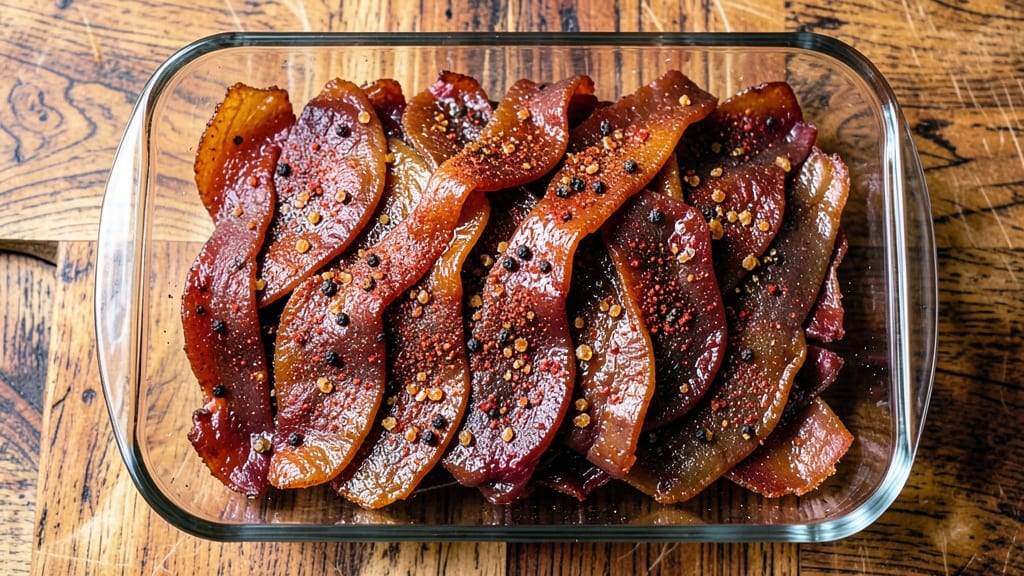
This air fryer beef jerky dehydrator recipe transforms tough cuts into chewy, smoky-sweet snacks in just 3 hours—no fancy equipment needed. I developed this method after struggling with uneven jerky results, and it’s now my go-to for restaurant-quality jerky at home.
The air fryer speeds up the initial cooking while the dehydrator ensures perfect drying, creating jerky that’s tender yet firm, with deep flavor in every bite.
The key to success lies in proper curing and thin, even slicing—critical steps that prevent spoilage and ensure consistent texture. You’ll work with raw meat, so food safety becomes non-negotiable: sanitize every surface, use separate cutting boards, and maintain a clean workspace.
This method delivers jerky that’s restaurant-quality without the wait, using simple ingredients and a foolproof process.
What makes this recipe stand out is the balance of smoky, sweet, and savory flavors—achieved through a well-calibrated spice blend and precise cooking times. The air fryer jumpstarts the process, while the dehydrator finishes the job, resulting in jerky that’s perfectly chewy and packed with flavor.
Whether you’re stocking up for hiking trips or craving a snack, this method ensures you’ll never buy store-bought again.
Once done, your jerky will keep for weeks in an airtight container, making it the ultimate make-ahead snack. The best part? You can customize the seasoning to suit your taste—smoky, sweet, spicy, or tangy. Let’s get started on making jerky that’s worth the effort!
Ingredients for air fryer beef jerky recipe dehydrator
Restaurant-quality jerky starts with these simple yet powerful ingredients—transforming tough beef into chewy, smoky perfection.
| Ingredient | Amount | Notes |
|---|---|---|
| Lean Beef Top Round Roast 🥩 | 1 ½ lb | Thinly sliced against grain |
| Kosher Salt 🧂 | 2 tbsp | Diamond Crystal preferred |
| Brown Sugar 🍯 | ½ cup | Light or dark variety |
| Black Peppercorns 🌶️ | 1 tbsp | Freshly cracked preferred |
| Ground Black Pepper 🌶️ | 1 tsp | Freshly ground |
| Smoked Paprika 🌶️ | 1 tbsp | High-quality for smoky flavor |
| Garlic Powder 🧄 | 1 tbsp | Freshly ground preferred |
| Onion Powder 🧅 | 1 tbsp | For savory depth |
| Cayenne Pepper 🔥 | ½ tsp | Adjust for heat preference |
| Worcestershire Sauce 🍶 | 1 tbsp | Vegan version if needed |
| Liquid Smoke 🌫️ | 1 tsp | For extra smokiness |
| Apple Cider Vinegar 🍎 | ½ cup | For tenderizing |
| Water 💧 | ½ cup | For curing marinade |
The lean beef top round roast is non-negotiable here—it’s lean enough to dry properly yet flavorful enough to shine. Costco or local butchers often have it pre-sliced thin, but if you’re slicing yourself, use a sharp knife and slice against the grain for that signature chew. Penzeys or bulk spice shops carry the best smoked paprika and cayenne—worth the extra few cents for that restaurant-quality depth. For Worcestershire, Lea & Perrins is the gold standard, but check labels for anchovies if avoiding them.
No smoked paprika? Regular paprika plus a pinch of liquid smoke works in a pinch. Short on brown sugar? Maple syrup or agave at half the amount adds sweetness without crystallization. The apple cider vinegar is crucial—it tenderizes the meat while balancing the salt. Heinz or Bragg brands are reliable for consistent acidity. If you’re prepping ahead, mix the dry spices first (salt, peppers, powders) in a bowl, then add the wet ingredients—this ensures even distribution. For extra smokiness, add a quarter teaspoon of chipotle powder to the mix.
This marinade keeps for up to 1 week in the fridge, but the beef should marinate for 12-24 hours for optimal flavor penetration. Once sliced, pat the beef dry with paper towels—moisture is the enemy of even drying. The air fryer stage (300°F for 15-20 minutes) jumpstarts the process, while the dehydrator (160°F for 4-6 hours) finishes it perfectly. Store in an airtight container with a paper towel to absorb moisture—keeps for weeks in a cool, dark place.
Why You'll Love This Recipe
- No-Fuss Setup: I swear by this recipe because it’s the only jerky I’ll make anymore—just slice, season with salt and brown sugar, and let the air fryer do the rest. No marinating overnight, no fancy dehydrator fussing; the air fryer handles the job in under 2 hours with zero babysitting.
- Sweet-Savory Magic: That caramelized brown sugar crust? It’s the star. The lean beef stays tender while the edges crisp just enough to shatter—like a perfect balance of salty, sweet, and peppery punch. Honestly, my kids fight over the last piece, and I don’t even make it fancy.
- Snack Attack Ready: This jerky is my go-to for backpacks, lunchboxes, or when I’m craving a salty crunch without the mess of chips. Between us, it’s also the only healthy-ish snack I’ll eat straight from the bag—no guilt, just satisfaction.
- Budget-Friendly Staple: A pound of top round roast stretches into way more jerky than store-bought, and the ingredients cost pennies. Plus, it keeps for weeks in the fridge, so I’m always stocked without breaking the bank. (Yes, even on a Tuesday night.)
Step-by-step instructions for smoky-sweet air fryer beef jerky
Transform tough beef into irresistible jerky using your air fryer—this method delivers restaurant-quality results in just three hours.
Cure the Beef for Maximum Tenderization
In a large mixing bowl, combine the 0.5 cup apple cider vinegar, 0.5 cup water, 2 tbsp kosher salt, 1 tbsp Worcestershire sauce, and 1 tsp liquid smoke. Stir until the salt fully dissolves—this creates your curing brine. Add the 1.5 lb lean beef top round roast and coat it thoroughly, ensuring every surface absorbs the marinade.
Cover the bowl and refrigerate for 24 hours to allow the curing process to work its magic. This step breaks down tough muscle fibers and infuses the beef with deep flavor. I like to rotate the bowl halfway through to ensure even distribution. Don't skip this—it's what transforms tough beef into tender jerky.
Prepare the Flavorful Dry Rub
In a separate bowl, mix together the 0.5 cup brown sugar, 1 tbsp black peppercorns (freshly cracked), 1 tsp ground black pepper, 1 tbsp smoked paprika, 1 tbsp garlic powder, 1 tbsp onion powder, and 0.5 tsp cayenne pepper. The brown sugar and smoked paprika create that signature sweet-and-smoky flavor profile we're after.
Once the beef has finished curing, remove it from the refrigerator and pat it dry with paper towels. This step is crucial—any moisture left on the surface will prevent the rub from sticking properly. Then, generously coat each slice with the dry rub mixture, pressing it in firmly so it adheres well. Let the beef sit at room temperature for 30 minutes before cooking to help the flavors meld.
Slice the Beef Against the Grain
Using a very sharp knife, slice the beef against the grain into strips about ¼-inch thick. The grain runs lengthwise through the muscle fibers, so cutting perpendicular ensures each bite is tender. For best results, work in batches and keep the sliced beef refrigerated until ready to cook.
I like to use a meat slicer for this step if available—it gives you perfectly uniform slices every time. If you're using a knife, angle it slightly and apply steady pressure to avoid tearing the meat. The thinner the slices, the faster they'll cook and the more tender they'll be.
Air Fry in Batches for Perfect Texture
Preheat your air fryer to 200°F—this low temperature ensures even cooking without drying out the beef. Arrange the beef strips in a single layer in the air fryer basket, leaving space between them for proper air circulation. Cook for 45 minutes, then flip the strips and cook for another 45 minutes until they reach an internal temperature of 160°F and are completely dry to the touch.
Here's where patience pays off—don't be tempted to increase the temperature. The slow cook ensures the jerky develops that perfect chewy texture without becoming tough. Check the strips periodically, especially the thicker ones, as cooking times can vary slightly depending on your air fryer model. The jerky is done when it's completely dry and no longer sticky to the touch.
Cool and Store for Maximum Shelf Life
Transfer the cooked jerky to a clean wire rack and let it cool completely at room temperature. This cooling step is essential—it allows any remaining moisture to evaporate, resulting in jerky that stays crispy for longer. Once cooled, store the jerky in an airtight container in the refrigerator for up to 2 weeks or freeze for up to 6 months for maximum freshness.
Each piece should be flexible but not brittle, with a deep smoky-sweet flavor that lingers. The perfect jerky has a slightly chewy texture with a satisfying snap. If you find any pieces that are still too moist after cooling, return them to the air fryer for 5-10 minutes at 180°F to finish drying them out completely.
Pro Tips For Making Air Fryer Beef Jerky Recipe Dehydrator
- Trim Thin, Not Perfect: Slice your top round against the grain into ¼-inch strips—thinner than you’d think. I used to fuss over even thickness, but jerky dries faster when it’s uniform, and the air fryer handles slight variations fine. A sharp knife and a steady hand (or a meat slicer if you’re brave) save time and frustration.
- Salt First, Then Wait: Rub the beef with kosher salt and brown sugar 30 minutes before air frying—this lets the seasoning penetrate. I learned this the hard way after making jerky that tasted like a dry, salty afterthought. Trust the process, even if you’re impatient like me.
- Skip the Crowding: Don’t overfill the air fryer basket—leave at least an inch of space between strips. I once stuffed mine in tight, and the edges ended up soggy while the outer pieces burned. Space guarantees even drying and crisp edges every time.
- Start Hot, Finish Low: Air fry at 300°F for 8 minutes to sear the sugar, then drop to 200°F for 2–3 hours until fully dry. The high heat kickstarts the caramelization (and hides any initial unevenness), while the low temp prevents rubbery jerky. Check it at 2 hours—it’ll firm up fast.
Wine and beer pairings for this dish
Bold Beer Pairings
For this smoky-sweet jerky, I reach for malty beers that complement the caramelized brown sugar and deep smokiness. A dark amber ale like Fat Tire from New Belgium Brewery brings nutty, toasty notes that mirror the jerky's flavor profile.
The slight bitterness cuts through the sweetness beautifully, creating a perfect balance. 🍺
If you prefer something lighter, try a honey wheat beer such as Blue Moon. The floral and citrus notes in the beer contrast nicely with the smoky, sweet jerky, making each bite feel fresh and vibrant.
The effervescence also helps cleanse your palate between bites, so you can savor every flavor.
Wine Matches
For wine lovers, a medium-bodied red like Zinfandel or Cabernet Sauvignon pairs wonderfully. The fruit-forward flavors of a California Zinfandel from Ravenswood or Robert Mondavi enhance the jerky's sweetness, while the tannins provide a satisfying contrast.
A glass of 14-16% ABV Zinfandel at room temperature brings out the best in both the jerky and the wine.
White wine lovers shouldn’t miss out—opt for a dry Riesling with a touch of sweetness, like Dr. Loosen Blue Slate. The acidity in the wine balances the richness of the jerky, while the subtle fruit notes harmonize with the smoky spices. Chill it to 50-55°F for the best experience.
Non-Alcoholic Options
Craft sodas can be surprisingly effective with jerky. A ginger beer like BrewDog Punk IPA Ginger Beer adds a spicy kick that pairs well with the smoky, sweet flavors. The effervescence also helps refresh your palate, making it a great choice for snacking. 🥤
For something even simpler, try a sparkling apple cider like Martinelli’s. The crisp, slightly tart notes complement the jerky’s sweetness, and the bubbles keep things lively. It’s a refreshing way to enjoy your homemade jerky without alcohol.
Serving Suggestions
Pair your jerky with sharp cheddar cheese and crackers for a classic snack platter. The saltiness of the cheese and the crunch of the crackers enhance the jerky’s flavors, making each bite even more satisfying. 🧀
For a heartier option, serve it with warm cornbread or sourdough bread. The buttery, slightly sweet bread soaks up any leftover flavors, creating a well-rounded snack that’s perfect for sharing. This combo is especially great for game day or tailgating!
Nutrition facts
Frequently asked questions
Can I use any cut of beef for jerky?
For best results, stick with lean cuts like top round or flank steak—they're tough enough to hold up during drying but not so fatty they'll spoil. Avoid marbled cuts like ribeye, as excess fat prevents proper dehydration and can go rancid. If you're using pre-sliced deli beef, check for added sodium preservatives, which can make the jerky too salty.
Why does my jerky turn out too tough or rubbery?
This usually happens when slices are too thick (over ¼-inch) or cooked at too high a temperature. Always slice against the grain and use 200°F in the air fryer—higher temps dry the outside too fast before the inside cooks through. For extra tenderness, marinate the beef for 48 hours instead of 24.
Do I need both an air fryer AND a dehydrator?
Not strictly! You can skip the air fryer and use just a dehydrator (set to 160°F for 6-8 hours170°F for 3-4 hours on a wire rack, flipping halfway. The air fryer/dehydrator combo gives the best texture balance.
How do I prevent my jerky from sticking together?
Always arrange strips in a single layer with space between them for airflow. Use a wire rack in your air fryer or dehydrator trays to maximize circulation. After cooking, let the jerky cool completely on a rack—never stack it while warm, or the condensation will make pieces cling together. A light spray of cooking oil on the trays before cooking also helps prevent sticking.
Can I make jerky without Worcestershire sauce?
Yes! Replace it with 1 tbsp soy sauce + ½ tsp fish sauce for umami depth, or 1 tbsp apple cider vinegar + ½ tsp onion powder for tangy brightness. For a vegetarian option, use 1 tbsp tamari + ½ tsp nutritional yeast. The key is maintaining the 1:1 vinegar-to-water ratio in the curing brine to ensure proper tenderization.